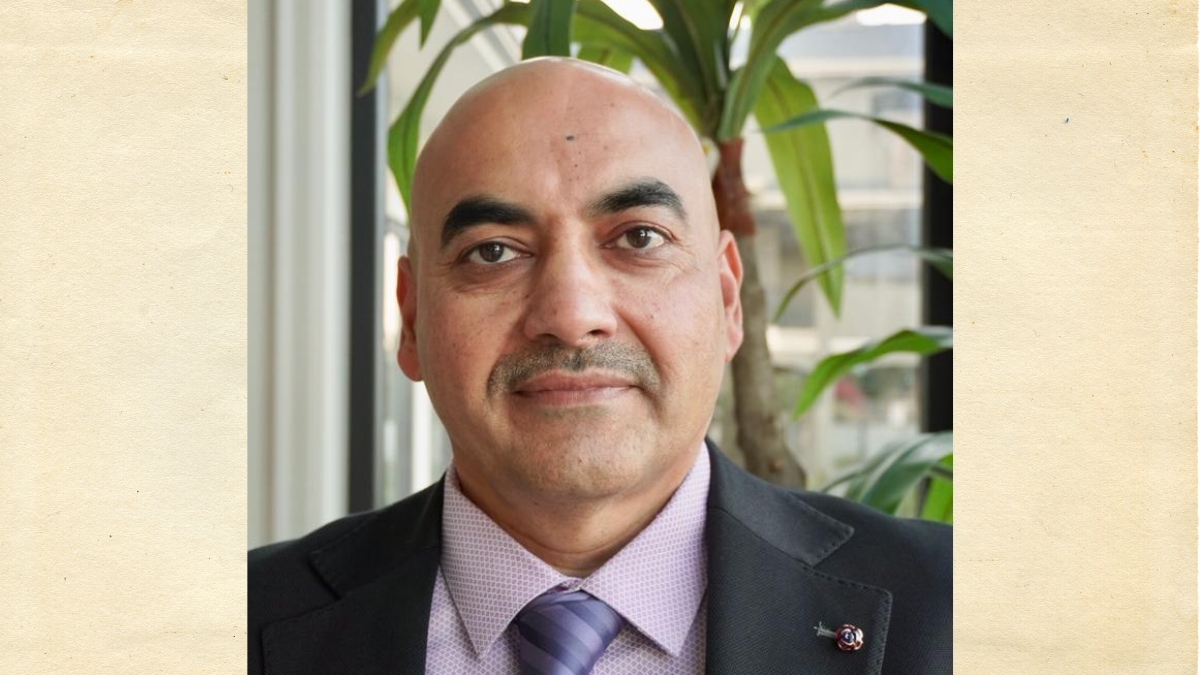
Authored by Sanjay Laul, founder, MSM Unify
For years, the conversation around studying abroad was straightforward for Indian families: pick a university, clear the IELTS, arrange the funds, and fly. That era is over. In 2026, the visa process itself has become the obstacle, and for a generation of Indian students who grew up assuming a foreign degree was within reach, the reality check has been jarring.
India's Ministry of External Affairs confirmed that the number of Indian students enrolled abroad fell by 5.7% in 2025 the first decline in three years, dropping from 1.33 million to just over 1.2 million. That figure, cited in India's parliament, carries political weight. But for the families sitting across the desk from an overseas education consultant in Delhi or Pune, it reflects something far more personal: visa rejections that no one saw coming, financial requirements that doubled overnight, and destinations that once felt like certainties now feeling like gambles.
Canada has undergone the most dramatic reversal. Until 2023, Indian students dominated its international enrollment pipeline. Today, consultants in Delhi report that application volumes to Canada have dropped by nearly 80%. The rejection rate for Indian applicants was approximately 32% in August 2023. By August 2025, it had risen to roughly 74%, nearly double the country's overall rejection rate of 40% that month. Canada has also cut its 2026 study permit target to 408,000, down from 485,000 just two years ago, discontinued the Student Direct Stream that gave Indian applicants faster processing, and raised the financial proof requirement to CAD 22,895 in living expenses, on top of tuition. The University of Waterloo, one of Canada's most prestigious engineering schools, has reported a two-thirds decline in Indian enrollments. For many Indian families, Canada has gone from a calculated bet to a near-certain disappointment.
Australia's tightening has been equally sharp, and more recent. In February 2026, four in ten student visa applications from Indian nationals were rejected up from 15% at the same point last year. The overall monthly refusal rate hit 32.5%, the highest recorded in two decades. At the heart of this shift is a policy change that took effect in January 2026: India was reclassified from Evidence Level 2 to Evidence Level 3 under Australia's Simplified Student Visa Framework, placing Indian applicants in the system's highest-risk category. This means more documentation, more scrutiny, and a new Genuine Student test that requires applicants to write four personal, 150-word responses explaining their study intent and career logic. Template answers are being rejected. Meanwhile, the Temporary Graduate visa fee the gateway to post-study work doubled to AUD 4,600 from March 1, 2026. Several top Australian universities have quietly trimmed their enrollment targets by 5 to 10 percent.
Against this backdrop, the United Kingdom looks almost stable and that contrast matters. Indian students received approximately 98,015 sponsored study visas in the first half of 2025, with a 96% approval rate and a 44% surge in grants during the second quarter alone. The UK's points-based system offers a level of predictability that Canada and Australia currently cannot match, and the two-year Graduate Route which requires no pre-arranged job offer remains one of the most genuinely useful post-study work visas in the world.
Germany, however, may be the most underappreciated story in Indian student mobility right now. Indian enrollment in German universities more than doubled between 2020 and 2024, from 28,905 to 59,420, according to DAAD. India is now Germany's largest international student market. With minimal or no tuition at public universities, a 90 to 92% visa approval rate, and a transparent financial system built around a blocked account, Germany offers something rare in 2026 clarity. Ireland and France are moving in the same direction, with Indian student numbers rising sharply as the traditional Big Four destinations become harder to navigate.
What all of this points to is a fundamental shift in how Indian students need to approach studying abroad. Destination choices can no longer be driven by brand recognition or habit. The students who are succeeding right now are the ones treating the visa process with the same seriousness they bring to their academic applications building verifiable financial trails well in advance, crafting Statements of Purpose that are specific and personal rather than copied from templates, and choosing destinations based on real approval odds and post-study outcomes.
The aspiration hasn't dimmed. Over 1.2 million Indian students are still studying abroad, and the hunger for international education remains one of the most powerful forces in global higher education. But the path has narrowed, the requirements have hardened, and the margin for error has shrunk. In 2026, preparation isn't an advantage. It's the baseline.
From mutual funds to digital assets: Why India is at a financial inflection point